
Starbucks Corp. has agreed to create a joint venture with alternative asset manager Boyu Capital, transferring day-to-day control of its mainland China retail operations while retaining substantial economic and brand interests.
The arrangement, announced on Monday, calls for Boyu Capital to pay approximately $4 billion for as much as 60 percent of the new entity that will oversee Starbucks cafés across China. Starbucks will hold the remaining 40 percent stake and will continue to license its trademarks and intellectual property to the venture.
Key terms and valuation
According to Starbucks, the agreement values the company’s Chinese business at more than $13 billion. That figure combines the proceeds from the sale of the majority interest, the book value of Starbucks’ retained minority share and the future stream of licensing fees expected from the new operating company.
Completion of the transaction is targeted for the second quarter of Starbucks’ 2026 fiscal year, subject to customary regulatory review. Until closing, Starbucks will continue to run its China unit under existing structures.
Strategic review leads to partnership
The Seattle-based coffee chain undertook a months-long review to evaluate strategic alternatives for its China operations, ultimately settling on a partnership model. In a statement, Starbucks China Chief Executive Officer Molly Liu said collaborating with Boyu would help the brand “fully unlock the vast market opportunity.”
Boyu Capital, founded in 2011 and headquartered in Hong Kong, manages private-equity and venture funds focused on Greater China. Its investment portfolio spans consumer, technology and healthcare sectors. The firm’s majority holding grants it operational control, while Starbucks maintains influence through board representation and brand oversight.
Market presence and growth targets
Starbucks opened its first store in mainland China in 1999 and, by 2015, the country had become the company’s second-largest market after the United States. The chain now operates roughly 8,000 outlets nationwide. During a CNBC interview in September, Starbucks Chief Executive Officer Brian Niccol said the market could eventually accommodate between 20,000 and 30,000 stores.
Expansion plans, however, have encountered headwinds. The COVID-19 pandemic and related mobility restrictions sharply reduced foot traffic. More recently, intensifying competition—particularly from domestic rival Luckin Coffee, which offers lower-priced beverages and now counts more locations than Starbucks—has pressured sales.
Recent performance indicators
In its fiscal fourth quarter, Starbucks reported same-store sales growth of 2 percent in China, driven by a 9 percent rise in customer visits. The company achieved that traffic gain in part by increasing promotional activity, a strategy that pushed the average transaction value lower and trimmed profit margins.
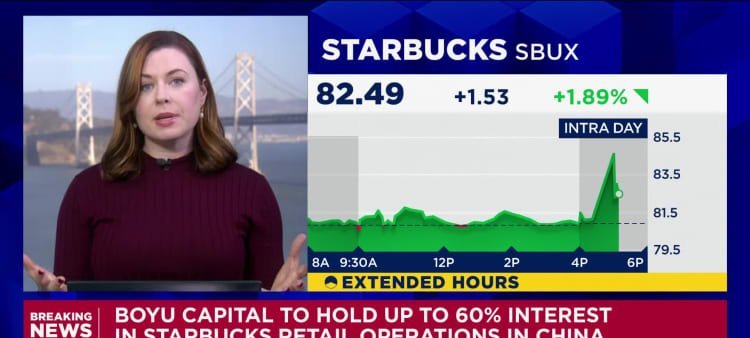
Imagem: Internet
Management has repeatedly emphasized confidence in China’s long-term potential, yet the market’s near-term softness has weighed on Starbucks’ consolidated results. Investors and analysts continue to monitor whether the new ownership structure can revitalize growth without eroding brand equity.
Changing calculus for U.S. brands
China’s large population and historically rapid economic expansion have long attracted American consumer companies. Lately, slower growth and stronger local competitors have prompted several firms to reassess their stakes. Earlier this year, Restaurant Brands International repurchased its faltering Burger King franchise rights from TFI Asia Holdings with the intent to resell them to a new operator. Conversely, McDonald’s increased its minority interest in its Chinese venture from 20 percent to 48 percent in 2021, underlining divergent approaches among Western chains.
The Starbucks–Boyu partnership adds to that evolving landscape. Analysts at Reuters note that joint ventures can provide operational agility and localized expertise while allowing foreign parent companies to concentrate on brand stewardship and global strategy.
Next steps
Regulators in China and, potentially, other jurisdictions must sign off on the transaction before it can close. After completion, Starbucks will report its 40 percent share of earnings from the venture under the equity method and will receive ongoing royalties based on systemwide sales.
The company did not disclose specific governance details, but indicated that both partners will collaborate on critical decisions related to brand standards, store development, supply chain management and digital platforms.
Crédito da imagem: CNBC