
United States Steel Corp. on Tuesday released a detailed outline for an $11 billion capital program intended to overhaul production facilities, streamline operations and expand research across all of its business segments by the end of 2028. The plan follows the company’s nearly $15 billion transaction with Japan-based Nippon Steel Corp., completed five months ago, that positioned the combined enterprise as the world’s fourth-largest steel producer.
The investment roadmap, presented at the company’s headquarters in Pittsburgh, addresses modernization at legacy plants, development of new product capabilities and initiatives aimed at lowering carbon emissions. U.S. Steel projects that the program will generate approximately $2.5 billion in savings through targeted capital expenditures and an additional $500 million through operational efficiencies.
Scope of the Capital Projects
Company executives said more than 200 individual projects have been identified across U.S. Steel’s flat-rolled, tubular, mini-mill and downstream units. Nearly 50 specialists from Nippon Steel are working alongside U.S. Steel managers to refine timelines, allocate resources and synchronize technical standards.
Highlighted projects include a large-scale refurbishment of the Hot Strip Mill at Gary Works in Indiana, installation of a slag-recycling facility at Mon Valley Works in Pennsylvania and upgrades to research centers focused on advanced, lower-emission steel grades. Chief Executive Officer Dave Burritt described the initiative as a “robust pipeline of growth projects” designed to enhance product mix and maintain competitiveness in core automotive, construction and energy markets.
Financial and Operational Targets
According to the corporate presentation, capital deployment will be spread evenly through 2028, with an emphasis on front-loading projects that unlock quick cost reductions. Management expects cumulative cash savings of $3 billion—$2.5 billion tied to plant modernization and $500 million from leaner workflows, procurement consolidation and shared services.
The $11 billion commitment forms part of the purchase agreement with Nippon Steel, which contains a “golden share” clause granting the U.S. federal government the right to appoint one board member and to review certain strategic decisions. This provision was included to ensure continued oversight of assets considered critical to national security.
Employment Impact
U.S. Steel said the program is structured to protect and create more than 100,000 jobs nationwide, though it did not break down how many positions fall under retention versus new hiring. Many of the company’s facilities were commissioned decades ago, and leadership argues that modern equipment will extend plant life and secure long-term employment in communities where steelmaking remains a primary economic driver.
United Steelworkers International President David McCall responded to Tuesday’s announcement by urging both companies to “prioritize this skilled, union workforce now and well into the future.” The union represents a substantial portion of the corporation’s hourly employees and has consistently advocated for reinvestment in domestic mills.
Strategic Rationale
Industry analysts note that the combined Nippon–U.S. Steel platform seeks to balance traditional integrated production with electric-arc mini-mills and advanced finishing lines. By upgrading hot-strip capacity in Indiana and introducing new recycling technology in Pennsylvania, the company aims to supply higher-strength, lighter-weight steel grades increasingly demanded by automakers pursuing fuel efficiency and electrification.
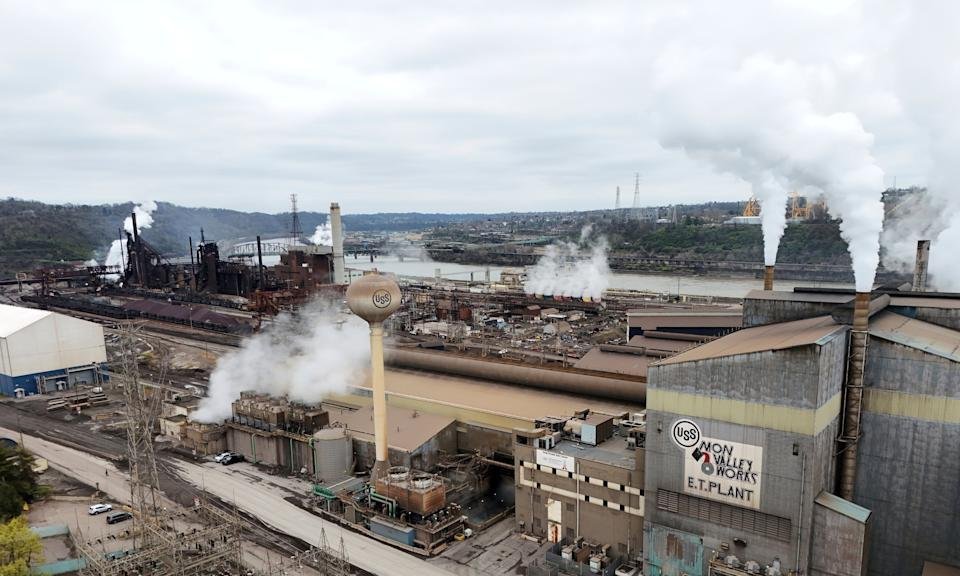
Imagem: Internet
The modernization plan also aligns with broader decarbonization goals set by global steel producers and governments. According to the World Steel Association, steel manufacturing accounts for roughly 7 percent of global carbon dioxide emissions, prompting large producers to invest in energy-efficient equipment and alternative raw-material processes.
Governance and Next Steps
The golden share arrangement gives federal officials a formal voice in significant operational or ownership changes, an uncommon but not unprecedented measure in transactions involving critical infrastructure. With regulatory oversight in place, U.S. Steel and Nippon Steel will proceed to secure permits, order long-lead equipment and negotiate vendor contracts. Management indicated that detailed project milestones and quarterly progress metrics will be released early next year.
Funding for the modernization will be sourced from Nippon Steel’s upfront capital pledge, combined cash flow of the merged entity and potential external financing. The company emphasized that no immediate plant closures are contemplated under the current plan.
While Tuesday’s presentation concentrated on U.S. operations, executives hinted at future coordination of global research programs to accelerate development of specialty steels with reduced carbon footprints. Specifics on those collaborations are expected to surface once domestic upgrades move into full construction phases.
United States Steel, founded in 1901, operates major facilities in Pennsylvania, Indiana, Michigan, Illinois and Alabama, as well as a growing mini-mill presence in Arkansas. Nippon Steel, headquartered in Tokyo, runs integrated mills and downstream units across Asia, Europe and the Americas. The combined organization shipped approximately 60 million metric tons of steel last year, ranking behind only China Baowu, ArcelorMittal and Ansteel Group in global output.
Crédito da imagem: Associated Press