
The password protecting the Louvre Museum’s video-surveillance system was set to “Louvre” at the moment thieves stole an estimated $102 million in jewels from the Apollo Gallery, according to a museum employee familiar with the network. The detail adds to mounting questions about security shortfalls surrounding the 30 October robbery in Paris.
French investigators say the entire operation—from entry to getaway—lasted roughly seven minutes. Using a truck-mounted mechanical cherry picker, the intruders reached a window, cut through it with power tools and escaped the same way. Only one camera covered the exterior of the Apollo Gallery, and it faced west, leaving the targeted window outside the frame, President and Director Laurence des Cars told a Senate committee hearing last month.
Perimeter weaknesses acknowledged
Des Cars testified that all interior alarms and cameras were functional during the heist, but she acknowledged “a weakness in perimeter security due to underinvestment.” While insisting the system inside the Apollo Gallery performed as designed, she said the museum must now adapt to “a new type of attack and modus operandi that had not been anticipated.” She added that security conditions at the institution, which she took over in 2021, were “appalling” when she arrived.
The gallery, famed for housing historic French crown jewels, has remained closed to visitors since the theft. Museum officials have not provided a timeline for its reopening.
Four suspects charged, at least one fugitive
Paris Public Prosecutor Laure Beccuau confirmed in a Franceinfo radio interview on 2 November that four individuals have been charged, while at least one participant is still being sought. The suspects in custody are not believed to be linked to organized crime networks, Beccuau said.
According to investigators:
- A 39-year-old taxi driver and a 34-year-old delivery worker and unemployed garbage collector, both from northern Paris suburbs, were the first to be arrested. DNA recovered at the scene connected them to the break-in, and both have partly acknowledged involvement.
- The 34-year-old was detained at Charles de Gaulle Airport as he attempted to board a one-way flight to Algeria.
- A 37-year-old man and his 38-year-old domestic partner, also from the northern suburbs, were later charged in the case.
Subsequent searches have produced additional items now under forensic review, Beccuau said, but the stolen jewels themselves remain missing.
Password raises cybersecurity concerns
The disclosure that the surveillance system’s password was identical to the museum’s name highlights basic cybersecurity lapses. Security specialists routinely advise institutions to employ unique, complex credentials, multi-factor authentication and regular audits—measures outlined by agencies such as the Cybersecurity and Infrastructure Security Agency. Investigators have not publicly stated whether the simple password played a direct role in the break-in, yet the revelation underscores broader questions about risk management at one of the world’s most visited museums.
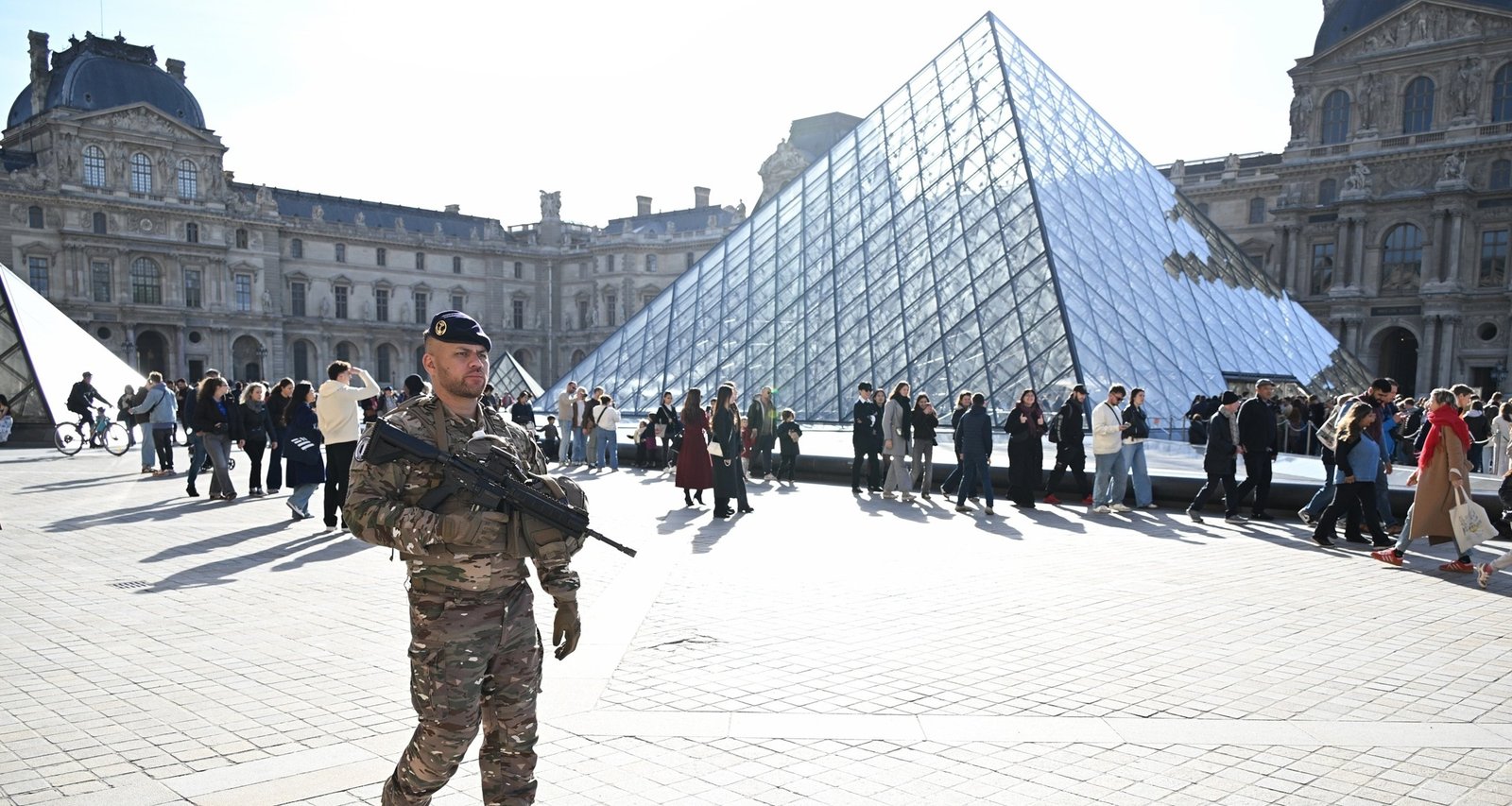
Imagem: Internet
Political and public scrutiny
French lawmakers have pressed museum leadership for details on funding and staffing dedicated to security. Des Cars told senators she had sought increased investment since taking office but did not specify amounts requested or received. The Ministry of Culture has opened a separate review into security protocols across national museums.
Outside experts note that the Louvre’s sprawling complex—part palace, part modern exhibition space—poses unique protective challenges. Large glass facades, numerous access points and high daily visitor volumes can complicate both physical and technological defenses. The museum has not disclosed whether additional cameras or motion detectors have been installed since the incident.
Focus shifts to recovery of jewels
Authorities are exploring all leads to locate the missing items, which include pieces dating back to the reign of Louis XIV. The international art-theft community is monitoring the case; similar high-value objects often surface months or years later on illicit markets or through private brokers, according to Interpol data on cultural-property trafficking.
Beccuau emphasized that investigators are coordinating with customs agencies and auction houses worldwide. No official valuation beyond the museum’s $102 million estimate has been publicly confirmed, and insurance arrangements have not been detailed.
Meanwhile, visitors to the Louvre encounter increased security screening and visible patrols by soldiers in the museum’s courtyards and galleries. The institution continues to operate under heightened vigilance as the probe advances.
Crédito da imagem: Emma Da Silva/AP